

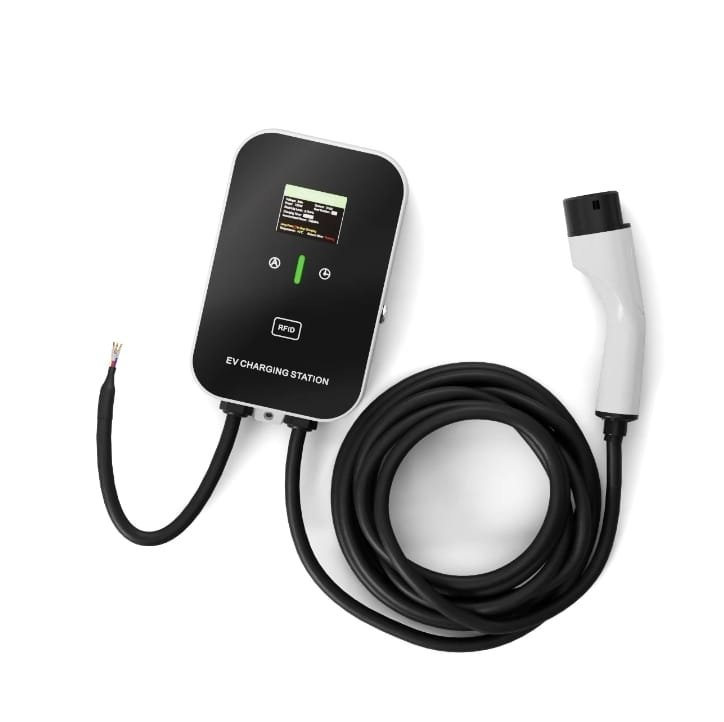
Smart EV Wall Charger 22kW 3-Phase

R25 288.50 incl. VAT
The Smart EV Wall Charger 22kW is the most powerful AC home charger available in South Africa, designed for EV owners who need the fastest possible overnight or daytime recharge. Running at 32A per phase across three phases, it delivers the full 22kW that modern EVs with 3-phase onboard chargers can accept.
A 60kWh battery pack is fully charged in under 3 hours at this rate. A 100kWh battery in under 5 hours. For fleet vehicles, shared EVs, or high-mileage drivers returning home with a near-empty battery, the 22kW charger eliminates range anxiety entirely.
Built-in Wi-Fi and TUYA app connectivity enable scheduled charging, real-time monitoring, current adjustment, and remote start/stop from your phone. Rated IP54 and fully weatherproof. Includes a 5-metre Type 2 cable and requires a 3-phase electrical supply.
Estimated Delivery Timeline
Delivery timelines are estimates. Orders typically arrive within 3–5 business days after payment is confirmed.
Maximum AC Charging Power for Your Home
22kW is the maximum AC charging rate accepted by any current electric vehicle. Vehicles like the Renault Zoe ZE50, BYD Han, and Mercedes EQS can charge at this rate, restoring full range in 3-5 hours instead of the 8-12 hours required by a 7kW charger. Even vehicles that charge at a lower maximum rate benefit from a 22kW charger, as it delivers the highest rate the vehicle accepts without any adjustment.
The Smart EV Wall Charger 22kW combines commercial-grade power output with smart home connectivity. It is equally suited to private residences with 3-phase supply, body corporate parking garages, small business fleets, and commercial hospitality properties that provide guest EV charging.
Specifications
- Output power: 22kW (3-phase, 32A per phase)
- Connector: Type 2 (IEC 62196-2) with 5m cable
- Input: 3-phase 400V AC
- Adjustable current: 6A to 32A per phase
- Ingress protection: IP54
- Operating temperature: -30C to +50C
- Display: 2.4-inch LCD screen with session status
- Connectivity: Wi-Fi, TUYA smart app (iOS and Android)
- Safety: over-voltage, over-current, overheating, leakage current, ground fault, lightning protection
- Certifications: CE, TUV, RoHS
- Cable length: 5 metres
TUYA Smart Control
The TUYA-connected app gives you full remote control over your charging sessions. Schedule charging to start during Eskom off-peak hours or peak solar production. Set a current limit to avoid tripping your main breaker when other high-draw appliances are running. Monitor per-session energy consumption and view historical usage. Share access with family members or employees. The charger also supports voice commands through TUYA-integrated smart home platforms.
Adjustable Current Output
The 6-32A current adjustment is particularly useful for South African conditions. During load shedding recovery, when your solar batteries are recharging and grid stability is low, you can drop the charger to 6-10A to reduce demand on your electrical system. During periods of full grid availability or peak solar generation, run at full 32A for fastest charging.
Installation Requirements
A 3-phase electrical supply is required. Installation by a registered South African electrician is mandatory. The circuit should include a dedicated 40A 3-phase breaker and a 30mA Type A or Type B RCD (earth leakage circuit breaker). A Type B RCD is recommended for vehicles with 3-phase onboard chargers. Consult your electrician for cable sizing based on the distance from your DB board.
Suitable Vehicles
All Type 2-equipped EVs can use this charger. Vehicles that benefit most from the full 22kW output include: Renault Zoe (22kW onboard charger), BYD Han (11kW, fully charged in 6h), Mercedes EQS (11kW), BMW i4 (11kW), Audi e-tron (11kW), Volkswagen ID.4 (11kW), and Volvo XC40 Recharge (11kW). Vehicles with 7.4kW maximum AC charge rates (Hyundai IONIQ 5, Kia EV6, BMW iX3) will still charge at their maximum supported rate.
Frequently Asked Questions
What is the difference between a 22kW and a 7kW EV charger?
A 22kW charger delivers three times the power of a 7kW unit, reducing charge time by up to 65% for vehicles that support 3-phase charging. Charge a 60kWh battery from 20% to 100% in roughly 2.5 hours with a 22kW charger, versus 7.5 hours with a 7kW charger.
Does my vehicle need to support 22kW for this charger to be worthwhile?
No. The charger supplies up to 22kW, but your vehicle only draws what its onboard charger accepts. If your car has an 11kW onboard charger, it will charge at 11kW. The 22kW charger is still beneficial as it ensures no power is lost to mismatched capacity, and future-proofs your installation as higher-capacity EVs become more common in South Africa.
Can I use a 22kW charger during load shedding on a solar system?
Yes, if your solar inverter and battery bank can supply 22kW continuously. Most residential solar systems (10-15kW inverters) cannot sustain 22kW output, but the charger’s adjustable current lets you dial down to match available solar or battery capacity. At 6A three phase, the charger draws only 4kW, well within the range of most residential solar systems.
Is a Type B RCD required for 3-phase EV chargers in South Africa?
It is strongly recommended. Some 3-phase onboard chargers in EVs produce DC leakage current that can saturate a standard Type A RCD and prevent it from tripping correctly. A Type B RCD detects both AC and DC fault currents and provides the appropriate level of protection. Consult a registered electrician for the correct specification for your installation.
2 reviews for Smart EV Wall Charger 22kW 3-Phase
Add a review
Related products
EV Chargers
EV Chargers
EV Chargers
Mariette van den Berg –
Really happy with the Smart EV Wall Charger 22kW 3-Phase. PowerVault had it in stock and shipped quickly. Product arrived well packaged and in perfect condition. It has been working exactly as described since installation. Will definitely order from PowerVault again.
Francois Louw –
The Smart EV Wall Charger 22kW 3-Phase is excellent quality and works perfectly for our application. Very satisfied with the product and with PowerVault as a supplier. Delivery was fast and the customer service was helpful when I had a pre-sale question.