
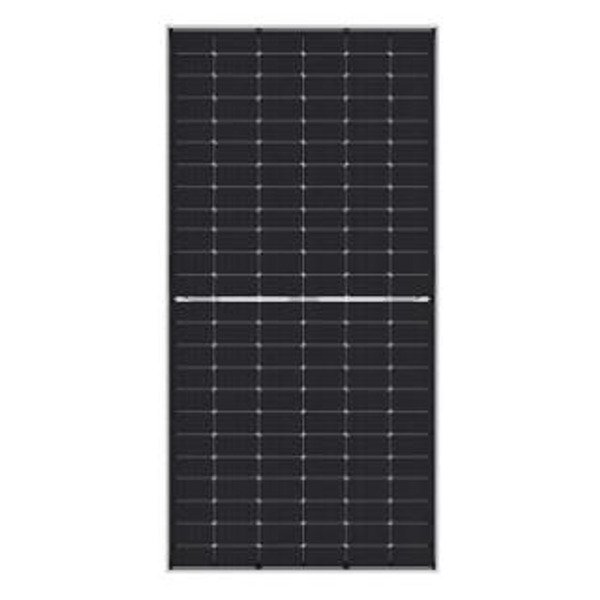
Jinko Solar 585W N-Type Bifacial TOPCon Solar Panel
R4 023.85 incl. VAT
The Jinko Solar 585W N-Type bifacial TOPCon solar panel delivers industry-leading efficiency for residential and commercial solar installations in South Africa. Using N-Type silicon with TOPCon (Tunnel Oxide Passivated Contact) cell technology, it achieves up to 22.3% panel efficiency and substantially lower degradation than conventional P-Type panels — retaining 87.4% of rated power output after 30 years. The bifacial design captures reflected light from roof or ground surfaces to generate additional rear-side power, increasing annual yield by 5–25% depending on installation surface albedo. With a 30-year linear power warranty and IEC 61215/IEC 61730 certification, it is a long-term investment in reliable South African solar generation. Compatible with all standard mounting systems and string inverters. Delivered from Midrand warehouse stock.
Estimated Delivery Timeline
Delivery timelines are estimates. Orders typically arrive within 3–5 business days after payment is confirmed.
Jinko Solar 585W N-Type TOPCon Bifacial — Overview
The Jinko Solar 585W N-Type TOPCon bifacial solar panel represents the current generation of residential and commercial solar technology available in South Africa. N-Type TOPCon cells achieve higher conversion efficiency than conventional P-Type PERC panels, operate at lower temperatures under South Africa’s intense sunlight, and degrade more slowly over their service life — meaning more kilowatt-hours generated per rand of installation cost over the full 30-year warranty period.
Technical Specifications
- Peak power (Pmax): 585W (STC)
- Cell technology: N-Type TOPCon bifacial
- Panel efficiency: 22.3%
- Open-circuit voltage (Voc): 49.8V
- Short-circuit current (Isc): 14.89A
- Maximum power voltage (Vmp): 41.8V
- Maximum power current (Imp): 14.0A
- Temperature coefficient (Pmax): -0.29% per °C
- Bifaciality factor: Greater than 80%
- First-year degradation: Less than 1%
- Year 2–30 degradation: Less than 0.4% per year
- Power warranty (30 years): 87.4% of rated output
- Dimensions: 2,278mm x 1,134mm x 30mm
- Weight: 32.5kg
- Certification: IEC 61215, IEC 61730, MCS, CE
N-Type TOPCon vs P-Type PERC: Why It Matters in South Africa
South Africa’s climate is characterised by high daily solar irradiance and significant ambient temperatures, particularly in Gauteng, the Northern Cape, and the Western Cape during summer. Conventional P-Type PERC panels suffer from Light-Induced Degradation (LID) and elevated high-temperature performance losses, reducing output during the hottest and sunniest parts of the day. N-Type TOPCon cells are inherently free from LID and have a lower temperature coefficient (-0.29%/°C versus -0.35%/°C for P-Type PERC), meaning they lose less power as they heat up on hot South African roofs.
Bifacial Performance: Rear-Side Gain in South Africa
The bifacial design of the Jinko 585W generates power from both the front and rear surfaces. On a white or light-coloured roof surface with a ground clearance of 200mm or more, rear-side power contribution typically adds 5–15% to the total panel output. On elevated ground-mount systems with high-albedo gravel or concrete beneath the array, rear-side contribution can reach 15–25%. When calculating system yield, installers should use a bifacial gain factor of 5–12% for most South African residential rooftop installations to avoid overpromising.
String Inverter and Hybrid Inverter Compatibility
At 49.8V Voc, three Jinko 585W panels wired in series produce a combined open-circuit voltage of approximately 149.4V — within the 150V maximum input of the Victron SmartSolar MPPT 150/45. Four panels in series (Voc ~199.2V) suit single-MPPT string inverters with 200V or higher input voltage. For Sunsynk, Deye, and most South African hybrid inverters with 500V or 1,000V MPPT input ranges, strings of 8–18 panels are typical in commercial installations. Always calculate string sizing based on minimum ambient temperature Voc for your installation site.
Frequently Asked Questions
What is the difference between the Jinko N-Type TOPCon and older Jinko P-Type PERC panels?
N-Type TOPCon panels have higher efficiency (22.3% versus approximately 20.5% for PERC), lower first-year degradation (under 1% versus 2–3% for PERC), lower temperature coefficient, no Light-Induced Degradation, and a longer power warranty. For the same roof area, N-Type TOPCon panels produce more energy over their 30-year service life.
Is the Jinko 585W suitable for residential rooftop installations in South Africa?
Yes. The panel fits on most residential pitched tile or IBR roofs. At 2,278mm x 1,134mm, four panels in portrait orientation require approximately 10.3m2 of unobstructed roof space. The combined weight of four panels is approximately 130kg, which is within structural limits for most residential roof structures — but a structural assessment is recommended for older or lightweight roofs.
Does the bifacial design require special mounting?
No. The Jinko 585W can be mounted with standard aluminium clamp-based mounting systems, including both close-roof and raised mounting configurations. The rear glass surface does not require protection during installation beyond what is standard for single-glass panels.
What warranty does the Jinko 585W N-Type carry?
The panel carries a 12-year product warranty covering manufacturing defects and a 30-year linear power warranty guaranteeing no more than 1% power loss in year one and 0.4% per year thereafter, retaining 87.4% of rated power output after 30 years.
3 reviews for Jinko Solar 585W N-Type Bifacial TOPCon Solar Panel
Add a review
Related products
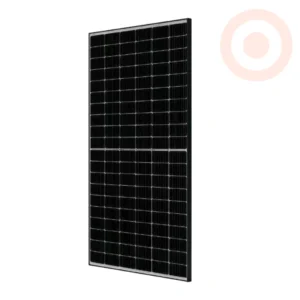
Solar Panels
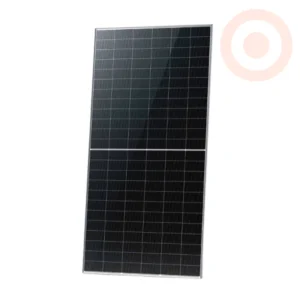
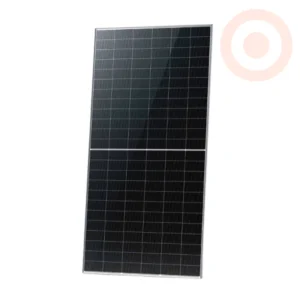
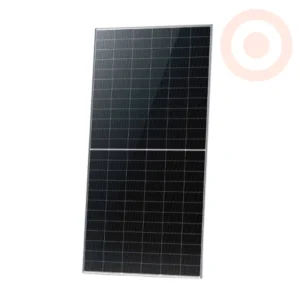
Solar Panels
Benita Viljoen –
The Jinko Solar 585W N-Type Bifacial TOPCon Solar Panel panels are outputting exactly as rated even on slightly overcast days. Generation starts early in the morning and our batteries are usually full by 11am in summer. Excellent build quality and delivered to us well packaged.
Roelof Erasmus –
Installed eight of the Jinko 585W TOPCon panels to expand our existing system and the performance improvement over our older mono PERC panels is clearly visible in the morning and late afternoon generation numbers. N-type technology delivers significantly better low-light performance. PowerVault delivered to Upington well packed and on time which is no small feat given the distance. Very happy.
Samantha Kruger –
After extensive research I chose the Jinko 585W TOPCon panels for our new installation in Midrand. The N-type cells provide better temperature coefficients which matters for our hot Gauteng summers. Generation data after two months is tracking above the datasheet figures. PowerVault priced these competitively and delivery was fast and very well packed.