Solar Guides
Best Hybrid Inverters South Africa 2025: Sunsynk vs Deye vs Growatt
Jun
Load shedding has pushed hundreds of thousands of South African homeowners toward solar energy. At the heart of every effective solar system are hybrid inverters — South Africa’s most sought-after solar component in 2025. Choosing the right one makes the difference between seamless backup power and a frustrating, expensive mistake. This guide compares the top hybrid inverters South Africa homeowners rely on — Sunsynk, Deye, and Growatt — with a complete breakdown of specs, pricing, and performance.
What Is a Hybrid Inverter?
A hybrid inverter combines a solar inverter, battery inverter, and grid-tie function into a single unit. It manages power from your solar panels, your battery, and the grid — automatically switching between sources to keep your home running with zero interruption. During load shedding, a hybrid inverter with battery storage keeps your appliances on within milliseconds of a grid failure. When the grid returns, it seamlessly switches back and resumes charging your battery from excess solar production. For official technical documentation on hybrid inverter technology, see the Sunsynk official website or the Deye International website.
Unlike a standard grid-tie inverter — which shuts down the moment the grid drops — a hybrid inverter is specifically engineered for the South African load shedding environment. It is the core component of any effective solar backup or off-grid system.
Top Hybrid Inverters South Africa 2025
Sunsynk Hybrid Inverters
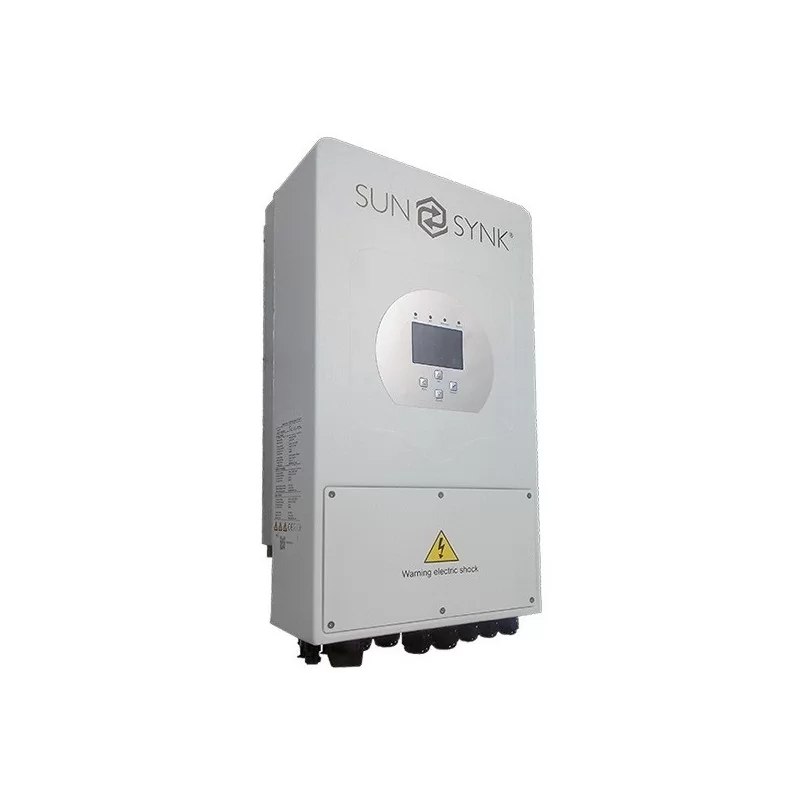
Sunsynk is the most widely installed hybrid inverter brand in South Africa. Their single-phase range runs from 3.6kW through to 16kW, covering everything from a basic loadshedding backup to a full off-grid capable system. Key advantages include dual MPPT solar inputs — allowing two separate strings of panels oriented in different directions — built-in Wi-Fi monitoring via the Sunsynk Connect app, wide battery compatibility, and a 10-year warranty on select models. When evaluating hybrid inverters South Africa customers consistently rank Sunsynk as the most trusted brand for residential use.
Sunsynk inverters are particularly trusted by South African solar installers because of strong local technical support and a proven track record through years of load shedding. The Sunsynk 10kW hybrid inverter is a top-selling model for medium to large homes, and the Sunsynk 12kW suits larger properties and small businesses requiring higher output.
Deye Hybrid Inverters
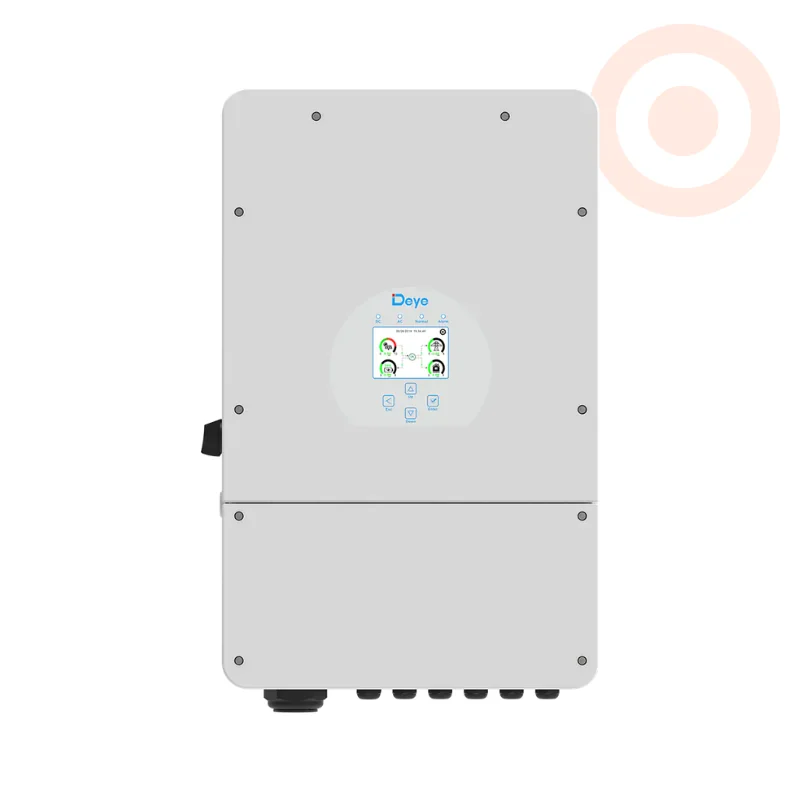
Deye has become a serious competitor to Sunsynk in the South African market. Their inverters offer excellent build quality, broad battery compatibility with third-party lithium brands, and competitive pricing. A major advantage of Deye is their three-phase range — the Deye 8kW, 10kW, and 16kW three-phase models are among the most capable options available for commercial properties and homes on a three-phase electricity supply.
Deye inverters work seamlessly with Pylontech, Dyness, BSL, Hubble, and most other CANBUS lithium batteries without additional configuration. The Deye 8kW hybrid inverter is one of the most popular single-phase models on the market, and the Deye 10kW is a strong choice for larger three-phase installations.
Growatt Hybrid Inverters
Growatt offers the most affordable hybrid inverters in South Africa without sacrificing core reliability. Their MIN range — available in 6kW and 8kW single-phase models — delivers solid performance at a price point that makes solar more accessible. Growatt is a well-established global brand with over 15 years in the solar industry and millions of units installed worldwide.
The main trade-off with Growatt is a slightly smaller battery compatibility list compared to Sunsynk or Deye, and fewer dedicated local specialist installers. For standard residential installations with compatible batteries, however, Growatt performs consistently well. The Growatt 8kW hybrid inverter and Growatt 6kW hybrid inverter are both available from PowerVault ZA.
Hybrid Inverters South Africa: Sunsynk vs Deye vs Growatt Comparison
| Feature | Sunsynk | Deye | Growatt |
|---|---|---|---|
| Phase options | Single-phase | Single + Three-phase | Single-phase |
| Power range | 3.6 – 16kW | 5 – 16kW | 5 – 8kW |
| Dual MPPT | Yes | Yes | Yes |
| Battery compatibility | Very wide | Very wide | Good |
| Built-in Wi-Fi monitoring | Yes | Yes | Yes |
| Local installer network | Excellent | Very good | Good |
| Warranty | 5–10 years | 5 years | 5 years |
| Price position | Mid-Premium | Mid | Budget-Mid |
What Size Hybrid Inverters South Africa Homes Need
When selecting hybrid inverters South Africa installers recommend sizing based on your home’s peak power consumption and solar array. Inverter sizing depends on your home’s peak power consumption and the size of your solar array. As a general guide for South African homes:
- 3kW – 5kW: Small homes or flats — lights, TV, Wi-Fi router, fridge, and a few small appliances. Not suitable for high-draw loads like an electric stove or geyser on solar.
- 6kW – 8kW: The most common choice for South African homes. Comfortably covers most appliances — microwave, washing machine, and pool pump — depending on how you stagger usage.
- 10kW – 12kW: Larger homes with 4+ bedrooms, small businesses, or properties with higher daytime loads. Supports a larger solar panel array for greater daily energy generation.
- 16kW+: Commercial and agricultural applications, or large properties with very high loads — underfloor heating, multiple air conditioners, or EV charging.
For the most competitive prices on hybrid inverters South Africa has to offer, To determine the right size, add up the wattage of all appliances you want to run simultaneously during load shedding. Your inverter should comfortably exceed that total. browse the full hybrid inverter range, or explore a complete solar kit with inverter, battery, and panels matched as a system.
All-In-One Hybrid Inverter Options
For the simplest possible installation, an all-in-one inverter combines inverter and battery in a single wall-mounted unit. The Sunsynk Loadshedder 4 includes a built-in 3.84kWh LiFePO4 battery in a compact unit designed specifically for South African load shedding. No separate battery cabinet required — ideal for smaller homes or rental properties where space is limited.
Frequently Asked Questions
What is the best hybrid inverters South Africa option in 2025?
Sunsynk is the most widely recommended hybrid inverter brand in South Africa in 2025, based on installer adoption, warranty support, and field performance during load shedding. Deye is a strong alternative — particularly for three-phase properties or buyers who want competitive pricing with wide battery compatibility. Growatt offers the best entry-level value. The right choice depends on your electricity supply type (single or three-phase), your load requirements, and your budget.
Can a hybrid inverter work without batteries?
Yes. A hybrid inverter can operate in solar self-consumption mode without a battery — your home uses solar during the day and draws from the grid at night. However, without a battery, the inverter will shut down during load shedding, just like a standard grid-tie system. A battery is required for backup power during grid outages.
What battery is compatible with Sunsynk, Deye, and Growatt inverters?
All three brands are compatible with most major LiFePO4 batteries that use CANBUS communication — including Pylontech, Dyness, Hubble, and BSL. Sunsynk and Deye have the broadest compatibility lists. Always confirm battery-inverter compatibility before purchasing to ensure correct state-of-charge communication and to maintain warranty coverage on both units.
How much does a hybrid inverter cost in South Africa?
In 2025, hybrid inverter prices in South Africa range from approximately R15,000 for a 5kW Growatt to R45,000 or more for a 16kW Sunsynk or Deye three-phase unit. The most common residential installation — a 5kW to 10kW single-phase hybrid inverter — typically costs between R18,000 and R32,000 before batteries and solar panels.
Is a hybrid inverter worth it in South Africa?
Yes. Given South Africa’s persistent load shedding and rising electricity tariffs, a hybrid inverter with battery storage pays for itself through reduced Eskom bills and protection from outages. Most homeowners in South Africa who install a correctly sized hybrid system recover their investment within 4 to 7 years, with the system expected to last 10 to 15 years or more.
Related Reading
- Sunsynk vs Deye Inverter South Africa 2026 — Complete Comparison
- Deye 8kW Hybrid Inverter Review South Africa 2026
- Is Solar Still Worth It in South Africa in 2026?
Shop Hybrid Inverters
- Sunsynk 8kW Hybrid Inverter
- Deye 8kW Hybrid Inverter
- Growatt 8kW Hybrid Inverter
- View all hybrid inverters
